O'Reilly's pioneering unconference, with a mechanism design twist.
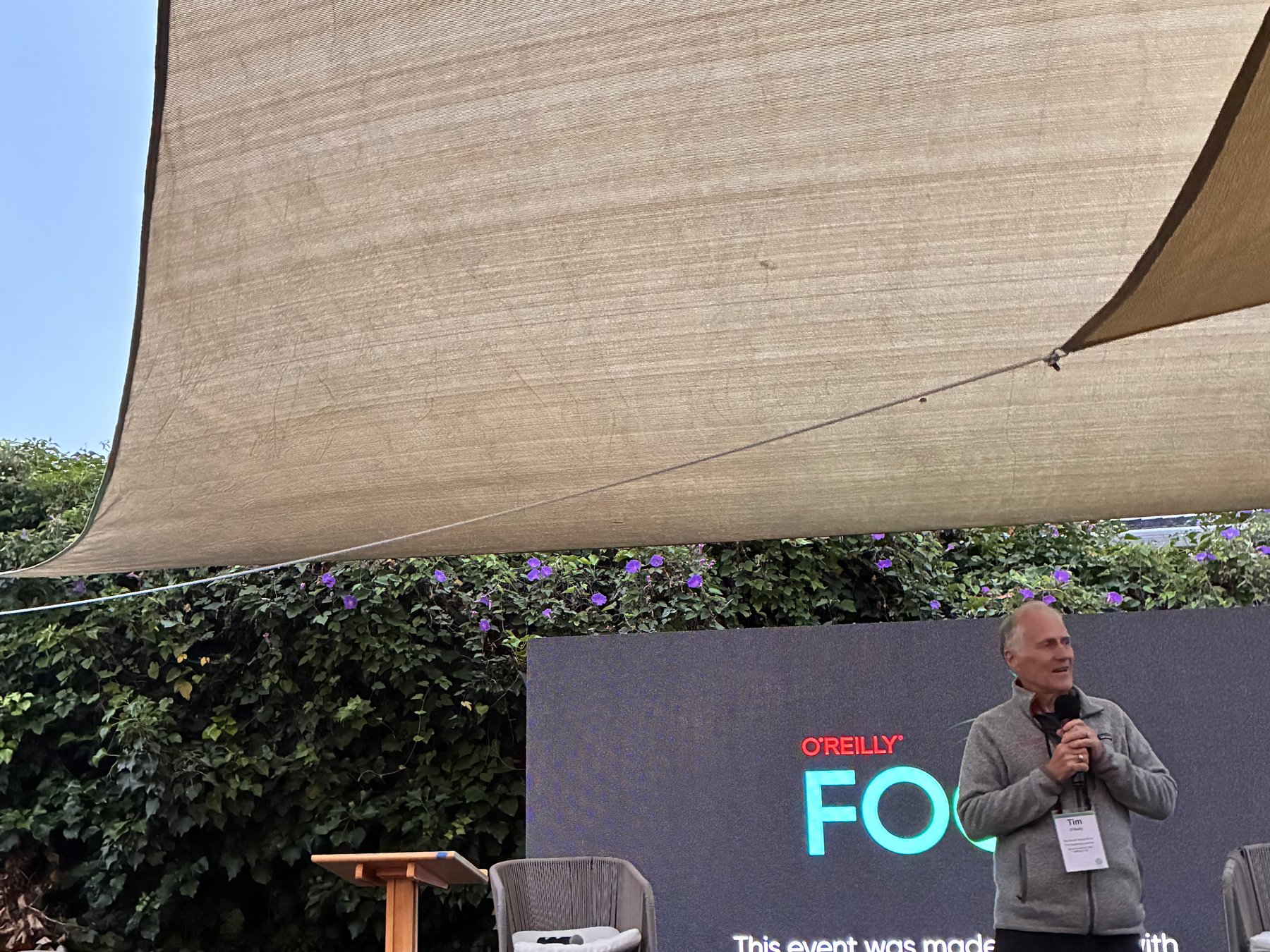
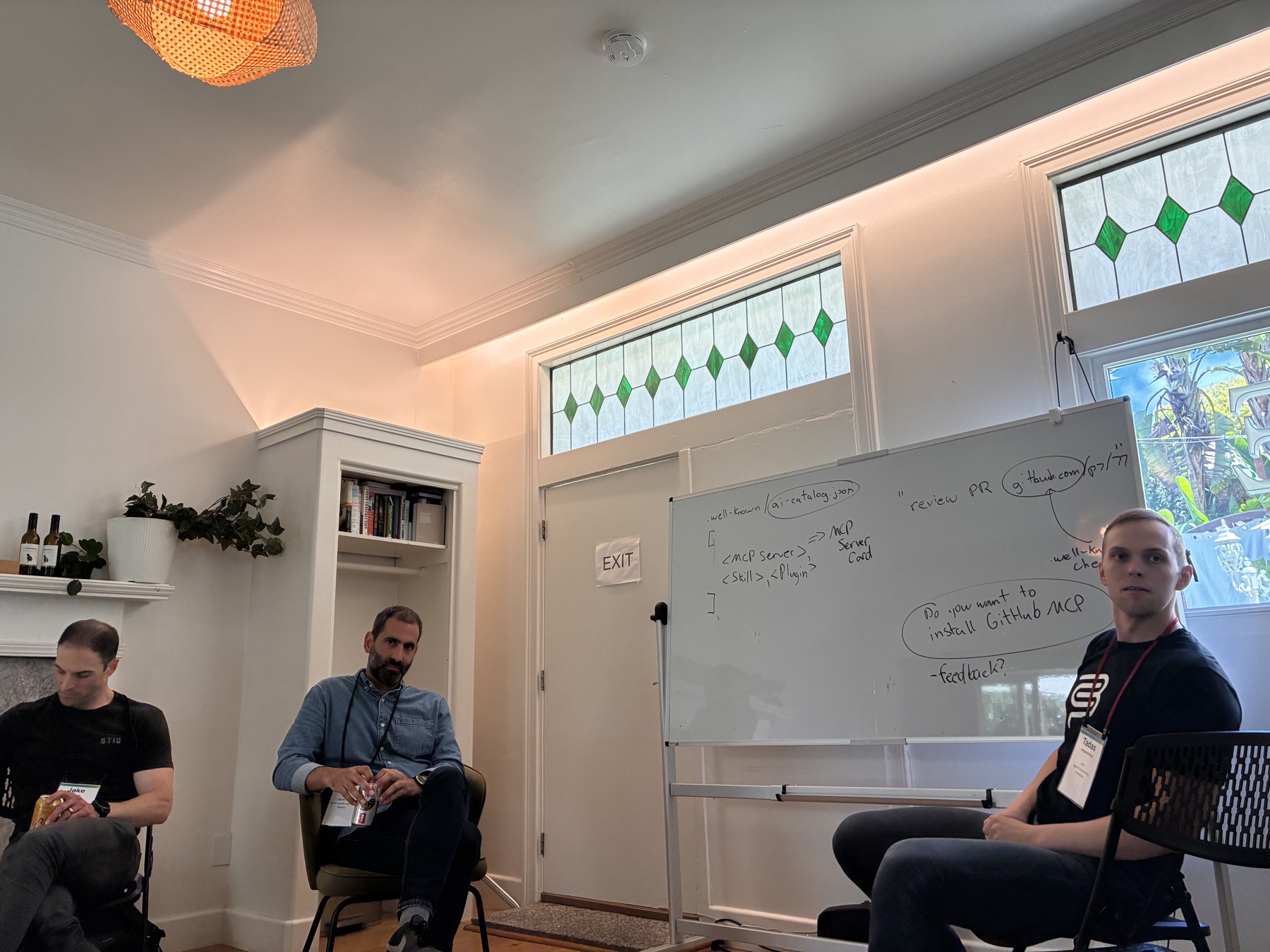
FOO Camp is O'Reilly Media's invitation-only unconference. It has been on hiatus since the pandemic, but with everything happening in AI, Tim decided it was time to get the band back together. Roughly 180 people (developers, product leaders, researchers, technologists, founders, funders, policymakers, writers) showed up at Lighthaven, Berkeley for three days with no set agenda. Attendees built the session grid together on Friday night. It's designed to feel like the high-energy break between sessions at the world's best conferences: informal, peer-driven, everyone in the room a potential speaker.
The AI Disclosures Project was a co-organizer of this event, in the same way that the Nature Publishing Group and Google partner with O'Reilly on its annual Science Foo Camps, and Sage and Microsoft AI on O'Reilly's Social Science Foo Camps. There isn't a program up front, but the curation of who to invite sets some initial conditions and shapes Foo Camp's serendipity. The point isn't the content, it's the connections. It's just that for geeks, ideas and implementation and debate are delicious treats, and make for a great party.
This page is just our slice. Many other threads ran in parallel: the future of software development with AI, agent safety, new social structures and safety nets for a human-AI future, artist rights, employment modelling, writing and moviemaking with AI (several people mentioned their conversations with David Thompson), the inner life of Claude, prompt debt and other complications in enterprise AI adoption, who is having the most fun with AI right now, and dozens more that would each deserve their own writeup. What follows is the strand we pursued.
Missing mechanisms, and why people show up for love, not money.
Tim opened by reminding the room why FOO Camp exists. People come because they're intrinsically interested, exploring things for love and not money. That is what creates the "hidden adjacencies": the moments when someone else in the room turns out to be working on the piece that connects to yours. Or, as Tim likes to say, new synapses in the global brain.
The thread he built out from there is one that has driven much of his recent work: the missing mechanisms of the AI economy. Every technological revolution depends on new economic mechanisms as much as new technical ones. The current AI race, framed as a handful of centralised providers everyone else calls into, is starting to fray. What would it take, he asked, to build a circulatory AI economy that returns value to human creators, and allows for new kinds of exchange rather than the extractive model that dominated AI's first phase? What might the valuable knowledge objects of such an economy look like, and what mechanisms are needed for that economy to function?
YouTube's Content ID is the closest historical precedent. When the music industry responded to user-generated video with takedown notices, YouTube asked how it could help them monetise the video instead. What followed was an ecosystem of new technical systems, negotiated rights frameworks, and automated market infrastructure. The AI-era question is whether the same shift is possible without recreating a handful of gatekeepers. We need an AI economy in which humans not only consume content, but are rewarded for continuing to create it.
Where should intelligence reside?
Across sessions I pursued a more specific version of Tim's opening: if we want AI markets to be participatory rather than winner-takes-most, where should intelligence itself reside? My Day 2 lightning talk sketched out an answer: intelligence needs to be architecturally distributed, via specialised production and open protocols. I wrote out the full version of that talk and published it on Asimov's Addendum.
The thread the AI Disclosures Project brought to Foo Camp turned on how AI markets can be shaped in a forward-looking manner through protocols and mechanisms. What signals should agentic markets allocate on if not "clicks" and "views", and what AI-native business models can sustain high-quality participation without premature content enclosure? Which market failures (free-riding, adverse selection, congestion, externalities) need collective mechanisms rather than bilateral deals, and which "matching" problems can be solved without unravelling into side deals? What do interoperability, provenance, and inspectability look like as native properties of agentic actions? And what can music, publishing, stock media, and open source teach us about running these markets without recreating legacy gatekeepers?
Where Does Intelligence Reside?
Why AI needs markets, and how specialised production and open protocols can enable this.
What comes out of Foo Camp is hidden adjacencies: the small aha moments when someone across the room turns out to be working on the piece that connects to yours. Structural change on the scale we discussed won't come together in one weekend at Lighthaven, but weekends like this are how a pattern starts. This page is a snapshot of one strand of ours; the rest of the weekend was busy on its own.